Commerce has always been built for people.
That’s changing.
Artificial intelligence is no longer just helping consumers decide.
It’s starting to act on their behalf: searching, comparing, negotiating and even transacting.
This is Business-to-AI (B2AI). And it’s already here.
A New Customer Has Arrived
Your next customer may not be human. It may be an AI agent:
- Comparing thousands of online options in seconds
- Negotiating price in real time
- Acting within rules set by a person
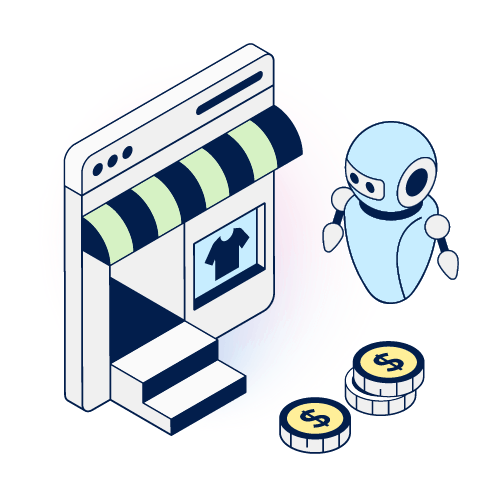
New Visa research underscores how quickly this shift is taking hold.
Commerce is shifting from market-to-human to market-to-machine.

From Assistant to Economic Proxy
AI is moving beyond recommendations. Nearly 40% of Americans have made a purchase they normally would not have considered as a result of using an AI agent or tool.
This marks a broader shift where AI doesn’t just help you decide, it helps get things done.
AI is becoming:
- A decision-maker
- A negotiator
- An economic agent
The Trust Gap
The issue isn’t AI. It’s control.
Guardrails Drive Adoption
Financial institutions are trusted more than independent AI.
This defines the model:

Human sets intent

AI executes

Human stays in control
Visa has spent decades earning trust across consumers, merchants and financial institutions. When Visa is part of a transaction, all parties can trust it will be secure and reliable.
As AI takes on a greater role in commerce, that trust becomes even more critical and will be foundational to how B2AI scales.
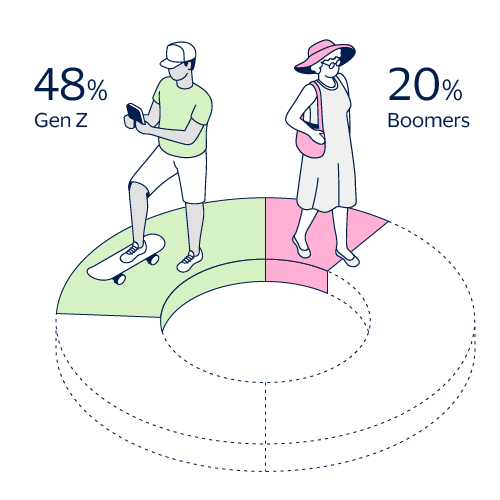
A Generational Shift
- 48% of Gen Z trust payment-enabled AI vs. 20% of Boomers
AI isn't just assisting discovery. It's shaping it.
How Commerce Changes
AI doesn’t shop like humans. It doesn’t browse. It doesn’t hesitate. It doesn’t get influenced by emotion or impulse.
Instead, it:
- Optimizes instantly
- Applies hard rules
- Switches without friction
AI evaluates options in real time comparing price, availability, delivery speed, and more. Then it acts within the parameters set by those in control: humans.
In this model, buying shifts from active participation to delegated execution.
That means decisions happen faster, with less ambiguity and fewer second chances. If a product doesn’t meet the criteria, it’s simply excluded.
In this model, discovery and decision-making shift from persuasion to performance. The funnel becomes computational, not emotional.
Trust Becomes the Infrastructure
In a B2AI world, the path to purchase changes. Businesses are no longer competing only for human attention. They are also competing for inclusion in AI-driven decisions.
That raises the bar.
Products, pricing and information must be structured in ways that AI can evaluate, verify and trust. If they’re not, they’re simply excluded. Here, trust becomes the infrastructure that enables AI to act on behalf of people securely, reliably and at scale.
At the center of this shift is a single requirement: trust.
B2AI will scale only if trust is built into the system through verified identity, secure credentials and clear human control.
Without it, the system doesn’t work.
Bottom Line
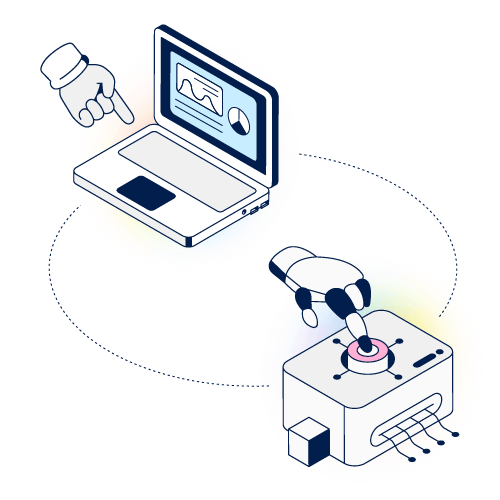
B2AI isn’t about AI replacing people. It’s about AI representing them.
The future of commerce has two participants:
- Humans who decide
- AI that executes
And the question for every brand is simple: Will their agent choose you?
FAQ
-
-
A: Agentic commerce is an emerging form of commerce where AI agents can discover, decide and complete purchases on a consumer’s behalf within user-defined permissions and secure controls.
-
-
A: B2AI describes a world where AI agents act on behalf of people to evaluate, select and transact. AI is no longer just informing decisions. It’s participating in them.
But humans remain accountable. AI may execute, but people define the objectives and the guardrails.
The AI customer has arrived.
-
-
A: Yes. Seventy-seven percent of business leaders are already using or piloting AI, and more than half say they would allow AI agents to negotiate directly with other AI agents.
That’s a structural shift in how commerce operates.
-
-
A: They’re ready for assistance but not unchecked autonomy.
Fifty-eight percent are comfortable with AI comparing prices, but only 27 percent are comfortable with AI spending autonomously without limits.
The issue isn’t AI. It’s control.
-
-
A: Trust.
Override capability. Identity verification. Secure credentials. Dispute resolution.
Thirty-nine percent say they would trust AI payments if they could override transactions at any time. Guardrails are what unlock growth.
-
-
A: As AI becomes a commercial participant, someone has to ensure the transactions are secure, authenticated and accountable.
Visa’s role is to provide that trust layer so innovation can scale responsibly.